
GraphPID — Engineering Intelligence for Legacy P&IDs
Automated P&ID extraction, deterministic engineering rule validation, and semantic MOC diffing into DEXPI-compliant knowledge graphs.
O tym modelu
Overview
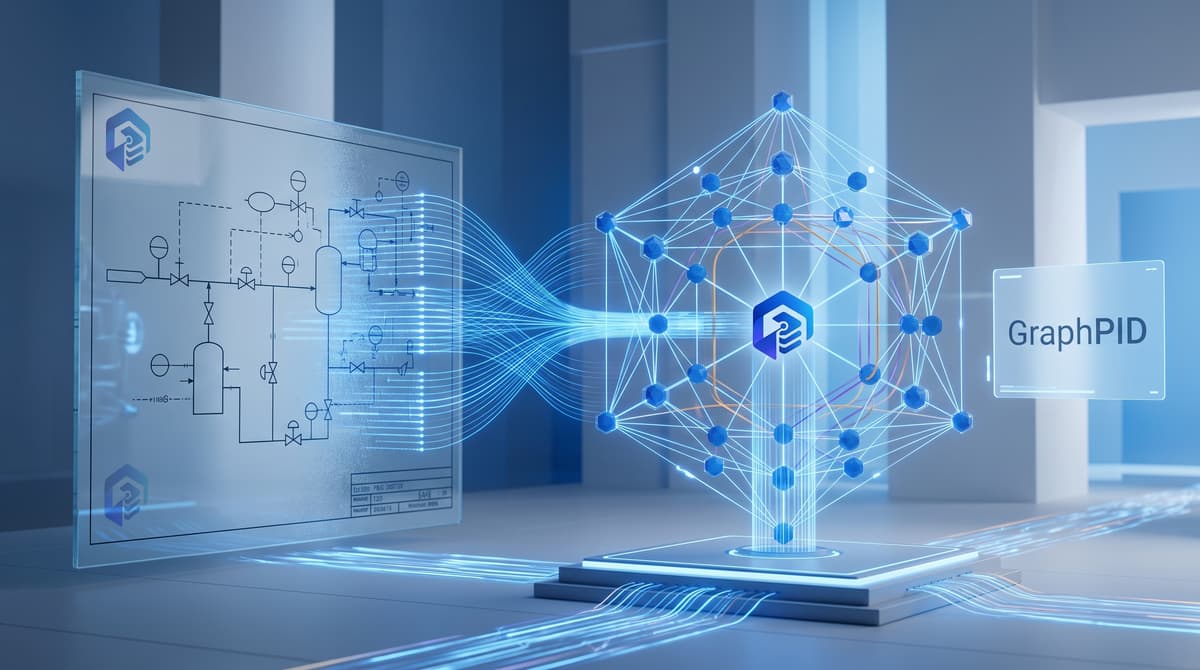
GraphPID is an engineering intelligence platform that transforms legacy raster and vector Piping and Instrumentation Diagrams (P&IDs) into verified, queryable, standards-compliant knowledge graphs. Built specifically for process plants, refineries, chemical facilities, and EPC engineering teams, GraphPID bridges the gap between static paper or PDF drawings and modern digital asset management.
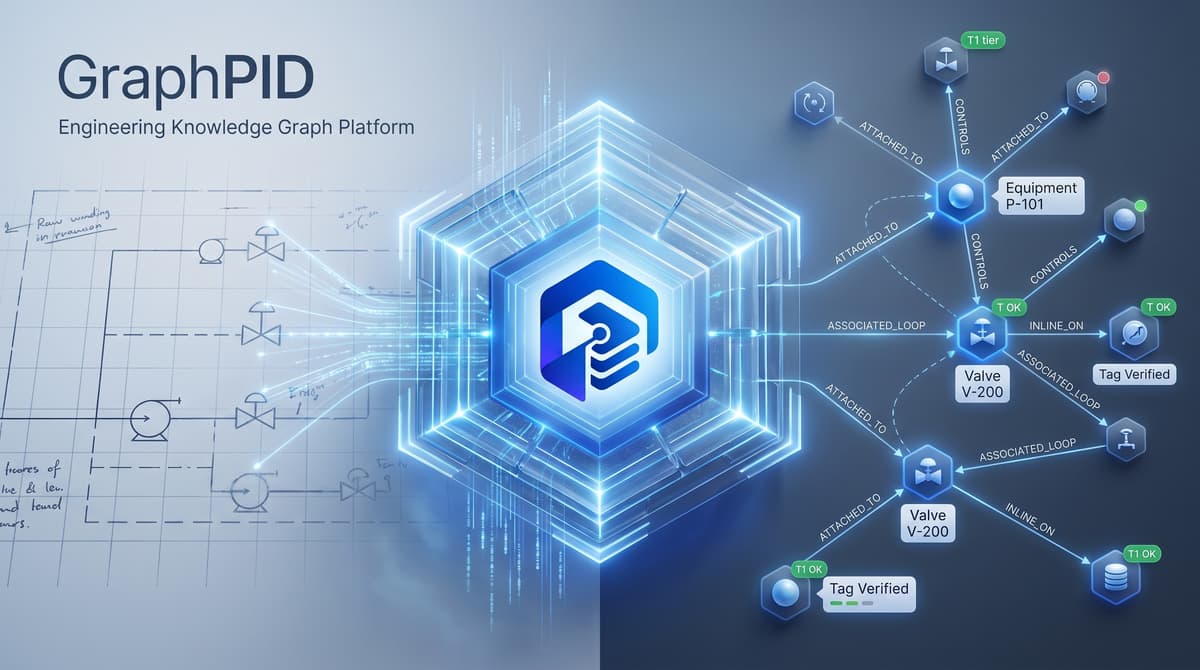
By combining inspectable structural computer vision with deterministic graph topology construction, GraphPID converts opaque drawings into an auditable digital twin substrate—extracting symbols, piping connectivity, instrumentation loops, and valve configurations with complete pixel-level provenance.
The Problem
Across the global process industries, millions of critical engineering drawings remain locked in legacy paper archives, TIFF scans, or unstructured vector PDFs:
- Manual Digitization Overhead: Re-drafting and transcribing a single complex P&ID sheet into modern CAD or plant modeling software typically demands 8 to 24 billable engineering hours.
- Silent Drafting & Redline Errors: Undetected drafting discrepancies and unrecorded field redlines compromise plant safety and cause costly delays during plant turnarounds and revamps.
- Disconnected Operations: Static drawings cannot be queried by maintenance or process systems, leading to severe discrepancies between drawings, DCS databases, and enterprise asset management systems (SAP PM, Maximo).
- MOC & Audit Risks: Verifying the impact of an engineering change across multiple drawing revisions is labor-intensive, error-prone, and lacks auditable classification.
The Solution
GraphPID delivers an automated, transparent, and deterministic pipeline that ingests drawing files at 300 DPI, runs sub-pixel deskewing and Sauvola binarization, classifies ISA-5.1 symbols, traces topological pipelines to true physical junctions, and binds instrumentation loops.
Instead of an inscrutable black box, GraphPID implements:
- Full Provenance & Auditability: Every detected node and edge retains its bounding box coordinates, image SHA-256 hash, and confidence metrics.
- Safety-Gated Review Workspace: Uncertain entities are routed into risk-tiered exception queues. Safety-critical (T4) items—such as pressure safety relief valves (PSVs) and car-sealed isolation valves—strictly block export until a certified engineer signs off.
- Deterministic Engineering Validation: A built-in rule engine (EV-01 through EV-10) automatically validates ISA syntax, piping continuity, check valve flow orientation, and DCS tag alignment.
- Semantic Revision Diffing: Direct topological comparison between drawing revisions that isolates changes and categorizes them into Cosmetic, Drafting, Operational, or Safety-Critical modifications for Management of Change (MOC) compliance.
Key Capabilities
- Hybrid Structural Perception: High-fidelity symbol recognition and polyline junction tracing without hallucinated connections or black-box artifacts.
- Deterministic Rules (EV-01 to EV-10): Automatically detects duplicate equipment tags, breaks in line size continuity, unisolated relief systems, orphan off-page connectors, and DCS registry mismatches.
- Human-in-the-Loop Validation: Synchronized dual-viewport review workspace allowing rapid keyboard-driven inspection, correction, and topological re-routing.
- Semantic MOC Diffing: Compares revision graphs to pinpoint modified piping specifications, relocated instrumentation, and altered valve configurations.
- Enterprise Asset Reconciliation: Read-only reconciliation adapters that query live SAP PM and IBM Maximo instances to identify ghost equipment and missing tags.
- Vendor-Neutral Interoperability: Native export to DEXPI 1.3/1.4 (ISO 15926-aligned XML), layered AutoCAD DXF (R12), SVG schematics, and CSV equipment/line registers.
Target Audience
- Process Engineering Teams: Automating P&ID takeoffs, line lists, and equipment schedules.
- Plant Digitization & Asset Integrity Managers: Modernizing legacy brownfield documentation into unified digital twin knowledge graphs.
- Instrumentation & Control Leads: Cross-referencing DCS registries and I/O assignments against physical piping diagrams.
- MOC & Turnaround Coordinators: Auditing drawing revisions and change proposals with verified topological diffs.
Kluczowe funkcje
Przypadki użycia
- Legacy paper and PDF P&ID brownfield digitization for plant revamps
- Automated Management of Change (MOC) redline impact and revision diffing
- Pre-turnaround DCS registry consistency audits and ghost instrument detection
- Computerized Maintenance Management System (CMMS) asset tag reconciliation
- Open-standard DEXPI knowledge graph export for plant lifecycle simulation
Plany cenowe
Plany cenowe
Powiązane produkty


Lecture2Exam
Upload whiteboard photos, slides, voice recordings, or lecture notes. Lecture2Exam synthesizes conceptual definitions, 3D interactive flashcards, and scored practice tests with Gemini 2.5 Flash in under 4 seconds.


AutoSub — AI Animated Video Captions
Automated video captioning engine powered by Whisper and ChatGPT. Generates TikTok and Alex Hormozi style animated subtitles with word-by-word timing in 12 viral styles.


LanguageMouth Coach — AI Pronunciation & Biomechanical Mouth Tracking Coach
Upload or capture your mouth shape while pronouncing target sounds. LanguageMouth Coach analyzes lip geometry, jaw opening, and tongue placement with Gemini 2.5 Flash in under 4 seconds.